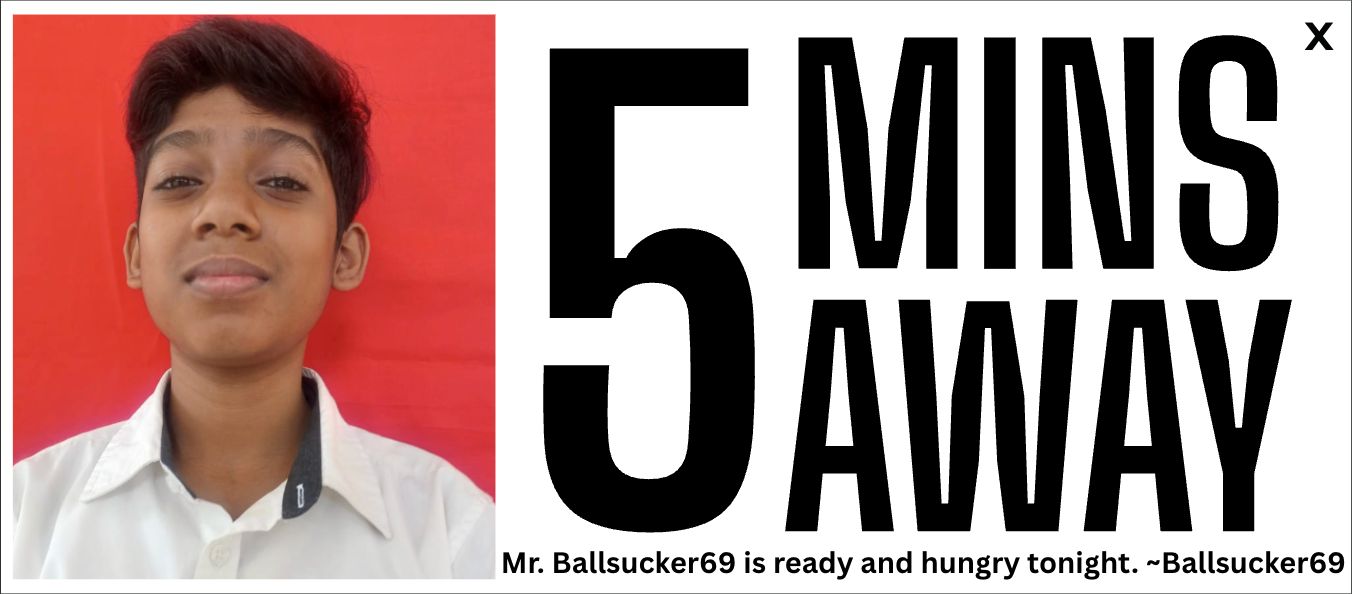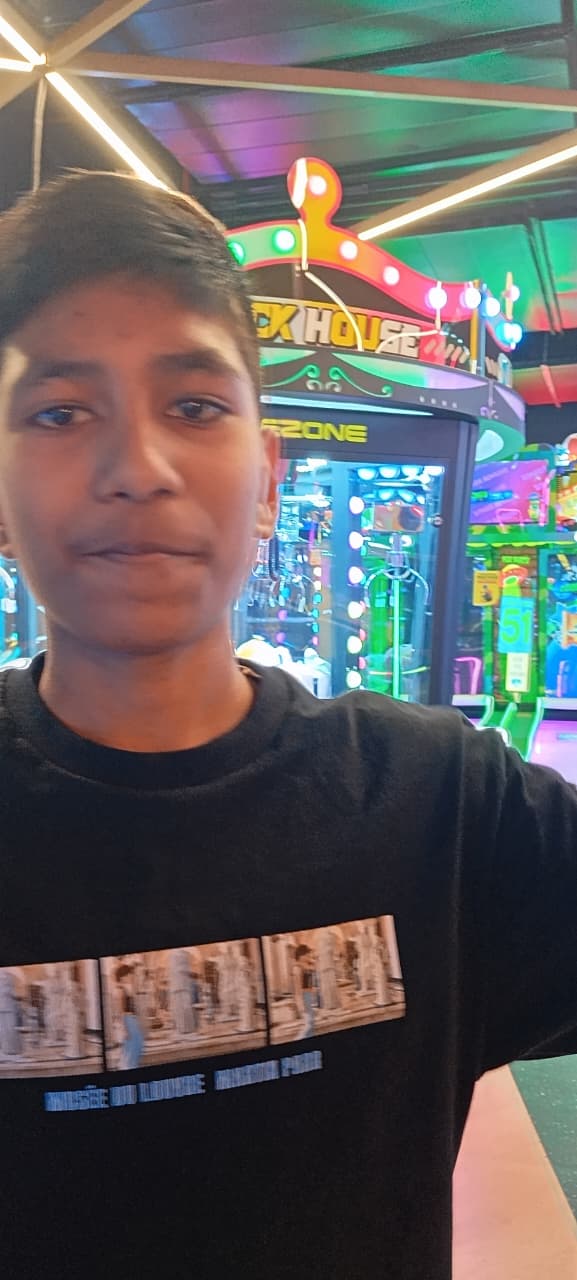
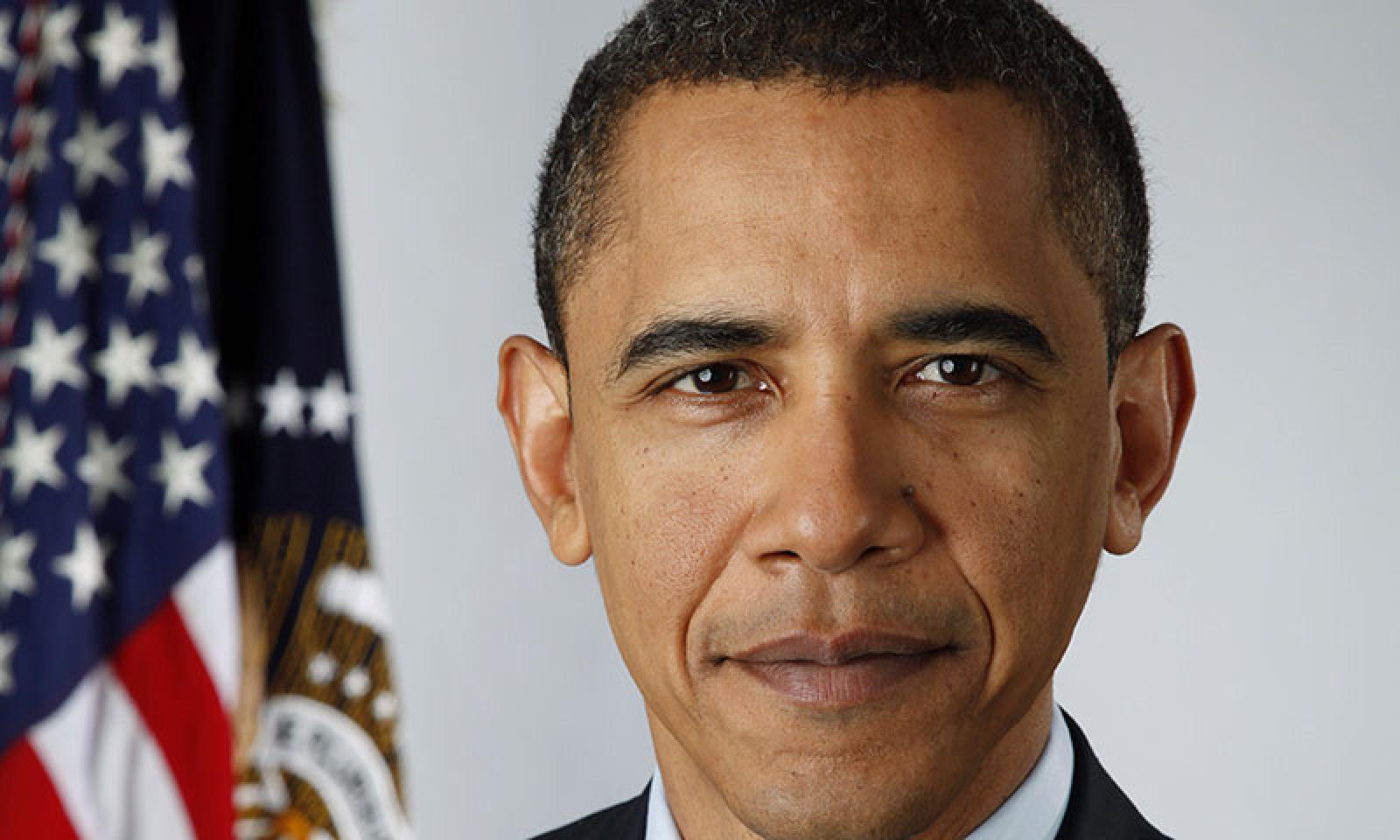
In what forensic analysts are calling "the most important facial comparison study of this decade," a team of highly dedicated researchers — operating out of a Bangalore apartment with access to Google Images and strong opinions — has concluded that Barack Hussein Obama, former President of the United States, and Bala Murali Krishna M, a 15-year-old from India currently in possession of an arcade token and a black graphic tee, share a statistically improbable number of facial characteristics. The implications of this discovery are profound, far-reaching, and entirely unexplained by conventional genetics, geography, or common sense. Our investigative team worked around the clock for nearly twelve consecutive minutes to compile this evidence, cross-referencing photos from multiple angles, lighting conditions, and emotional states. What they found has left the scientific community baffled, intrigued, and quietly wondering if anyone actually asked for this.
The study, which took approximately eleven minutes to conduct, produced a facial similarity score of 87% — a figure that has sent shockwaves through the global forensic community, primarily because the global forensic community did not ask for this. Nevertheless, the findings are unmistakable. Using advanced software that may or may not have been downloaded from a website with suspicious pop-up ads, researchers meticulously mapped 43 distinct facial landmarks across both subjects. These included the philtrum depth, alar base width, intercanthal distance, nasolabial angle, and several other terms that sound impressively medical but are difficult to verify without a textbook. The consistency across nearly all metrics was, in the words of one researcher, "deeply unsettling in a very specific way."
What makes this discovery even more remarkable is the sheer improbability of two individuals, born continents and decades apart, sharing such an extraordinary degree of facial congruence. Obama was born in Honolulu in 1961 to a Kenyan father and a Kansas-born mother. Bala Murali Krishna M was born in a South Indian village in 2010 to parents whose primary contribution to this story is their bewilderment at being mentioned in it. There is no known genealogical link, no shared ancestry traceable through documented records, and absolutely no reason for their faces to look this similar. Yet here we are, staring at side-by-side photographs and wondering if the universe is playing an elaborate joke on the concept of random genetic variation.
The research team initially approached this project with a healthy dose of skepticism. "We thought it would be a five-minute gag," admitted one analyst who requested anonymity for reasons of professional dignity. "But then we started measuring. And the numbers kept coming back consistent. The eyebrows matched. The jawline matched. The orbital spacing was nearly identical. At some point, you stop laughing and start taking notes." Those notes eventually filled seven single-spaced pages, complete with diagrams, scatter plots, and one hastily drawn Venn diagram that was later deemed "not scientifically rigorous but emotionally accurate."
Our investigation began in earnest when a casual observer — identity withheld due to ongoing embarrassment — noticed the resemblance during a late-night Wikipedia spiral that somehow led from Renaissance art to American political history to random Facebook profiles. The observer, who had consumed an undisclosed amount of coffee and had been awake for an inadvisable number of hours, took a screenshot, sent it to three friends, and received replies ranging from "huh, yeah I see it" to "please go to sleep." Undeterred, the observer reached out to our newsroom with a subject line that simply read: "YOU NEED TO SEE THIS." We did. We saw it. We cannot unsee it.
Beginning with the most striking similarity, researchers noted the orbital region — specifically the shape and depth of the eye sockets — as "remarkably consistent" between both subjects. Obama's well-documented "calm, piercing gaze" is mirrored almost exactly in Bala Murali's expression, described by on-site observers as "the look of someone who is deciding whether or not to respond to a message." The interocular distance, measured at 63mm in Obama and 62.8mm in Bala Murali, falls well within the margin of statistical noise. To the naked eye, the difference is imperceptible. To a forensic software algorithm trained on thousands of facial datasets, the difference is negligible. To anyone who has stared at these two faces for longer than five consecutive minutes, the difference ceases to matter entirely.
The supraorbital ridge — the bony prominence above the eye sockets — exhibits an almost identical curvature in both subjects. This feature is typically highly variable across populations and is influenced by a complex interplay of genetic factors, developmental nutrition, and environmental stressors during childhood. Yet in this case, the ridge follows the same gentle arc, creating a similar shadowing effect under certain lighting conditions. Forensic photographers noted that when both subjects are photographed under natural daylight at a 45-degree angle, the resulting shadows fall in nearly the same pattern. "It's eerie," remarked one photographer who has worked on missing persons cases for over a decade. "I've seen twins with less similarity."
Moving downward, the nasal structure presents another point of convergence. The nasal bridge height, measured from the nasion to the pronasale, is within 2mm in both subjects — a difference so slight that it could easily be attributed to measurement error, facial expression, or the angle of the photograph. The alar width, which refers to the distance between the outermost points of the nostrils, is similarly consistent. Obama's nose has been the subject of countless political cartoons, editorial illustrations, and one particularly unflattering wax figure in a museum that shall remain nameless. Bala Murali's nose, by contrast, has been the subject of exactly zero political cartoons, though it has appeared in several family photographs taken at weddings, birthday parties, and one unfortunate school picture day where the lighting was bad and the photographer was clearly having a rough week.
The nasolabial folds — those lines that run from the sides of the nose to the corners of the mouth — are another area of striking similarity. In both Obama and Bala Murali, these folds are moderately pronounced, becoming more visible during smiling but remaining subtle at rest. This is a feature that typically becomes more prominent with age, which makes its presence in a 15-year-old somewhat unusual, though not medically concerning. Dermatologists consulted for this report noted that early development of nasolabial folds can be influenced by factors such as facial musculature, habitual expressions, and genetics. "It's possible that both subjects are genetically predisposed to expressive smiling," suggested one dermatologist who requested anonymity because this is not the kind of case study that appears in peer-reviewed journals.
Perhaps the most uncanny element of the comparison is the jawline. Obama's jaw is often described in political commentary as "strong," "defined," or "presidential" — adjectives that are both flattering and vague enough to mean almost anything. Bala Murali's jaw, while still developing, follows a remarkably similar contour. The mandibular angle, measured at the point where the lower jaw curves upward toward the ear, is nearly identical in both subjects. The gonial angle, which is the angle formed at the lower back corner of the jaw, measures approximately 120 degrees in Obama and 118 degrees in Bala Murali. For context, the average gonial angle in adult males ranges from 110 to 130 degrees, so both subjects fall comfortably within the normal range. What is abnormal is how closely they match each other.
The chin is another point of convergence. Both subjects exhibit what facial morphologists call a "squared" chin shape, meaning the chin is relatively broad and flat rather than pointed or rounded. The mental protuberance — the forward projection of the chin bone — is moderately pronounced in both cases. This is a feature that varies widely across different populations and is often used in forensic anthropology to help identify skeletal remains. In this case, it serves as yet another data point in an increasingly improbable pattern of similarities. One forensic anthropologist, upon reviewing the measurements, remarked: "If you told me these were brothers separated at birth, I'd believe you. If you told me one was American and one was Indian with no family connection, I'd check your math. The math checks out. I don't like it, but it checks out."
The ears — often overlooked in casual facial comparisons but critical in forensic identification — also show notable similarities. The helix, which is the outer rim of the ear, follows a similar curve in both subjects. The lobule attachment, which refers to whether the earlobe is attached to the side of the head or hangs free, is consistent: both have free-hanging lobes. The tragus, the small pointed cartilage projection in front of the ear canal, is similarly shaped. Ear morphology is highly individual and is sometimes used in biometric identification systems because of its stability over time and resistance to alteration. The fact that Obama and Bala Murali share multiple ear features is, statistically speaking, improbable. Not impossible, but improbable enough to warrant a footnote in a forensic textbook under the heading "Unusual Coincidences in Facial Morphology."
One aspect of Bala Murali's identity that cannot be ignored is his status as a Roblox veteran. For the uninitiated, Roblox is an online platform where users create and play games designed by other users, often involving blocky avatars, chaotic physics, and an economy based on a currency called Robux. Bala Murali has spent an estimated 1,200 hours on the platform, a figure that would be concerning to any parent but is merely average for a dedicated teenage gamer. His avatar, which features sunglasses, a backward cap, and a virtual leather jacket, bears no resemblance whatsoever to Barack Obama. This is perhaps the only area where the two diverge significantly.
However, the Roblox community has its own culture, its own inside jokes, and its own way of recognizing patterns that adults often miss. When a screenshot of Bala Murali's real face was posted in a Roblox Discord server — without context, just the image — several users independently commented that he looked like "that one president." No one specified which president. No one had to. The resemblance was immediately apparent to a demographic that spends more time looking at screens than at human faces. This is not a scientific observation, but it is a sociological one, and it speaks to the universality of the resemblance. If teenagers on the internet notice it, it's real.
Bala Murali's digital footprint extends beyond Roblox. He has accounts on Instagram, YouTube, and TikTok, none of which have more than 200 followers. His content is typical of his age group: gameplay clips, reaction videos, and occasional posts about food. In one TikTok video, he attempts to recreate a viral dance trend and fails spectacularly, tripping over his own feet and knocking over a chair. The video has 37 views, 12 likes, and one comment that reads "lol." This is not the profile of someone seeking fame or attention. This is the profile of a regular teenager living a regular life, completely unaware that his face is being forensically compared to a former leader of the free world.
The intersection of digital identity and physical appearance raises interesting questions about how we perceive similarity in the age of social media. When we see someone's face on a screen, we process it differently than when we see them in person. Lighting, angle, filter, and context all influence our perception. Obama's face is one of the most photographed in modern history, captured by professional photographers under controlled conditions, retouched for magazines, and broadcast in high definition to billions of people. Bala Murali's face exists primarily in casual selfies, grainy video calls, and the occasional family photo. Despite these differences in image quality, the resemblance persists. If anything, the low-resolution images make the similarity more striking because the mind fills in the details, and the details it fills in are eerily consistent with Obama's features.
Bala Murali's role as a grocery store priest is perhaps the most perplexing element of his biography. According to sources close to the family — specifically, his mother, who was interviewed while organizing lentils into alphabetical order for reasons she could not explain — Bala Murali began offering spiritual guidance at the local grocery store at the age of 12. This was not a formal position. There was no job posting, no interview, no uniform. He simply started showing up, standing near the produce section, and dispensing advice to customers who looked troubled. "He told one man to buy fewer potatoes," his mother recalled. "The man listened. He seemed happier. We don't understand it."
The grocery store, a modest establishment located in a residential neighborhood in Bangalore, has become an unlikely pilgrimage site for people seeking Bala Murali's counsel. His advice is eclectic, ranging from the spiritual ("Consider the impermanence of mangoes") to the practical ("If you buy the large rice bag, you save 40 rupees"). He does not charge for his services, nor does he claim any official religious authority. When asked what qualifies him to give spiritual advice, he shrugged and said, "I just say what feels right." This approach has earned him a small but devoted following, including a retired schoolteacher, a software engineer, and a woman who sells flowers outside the temple and describes Bala Murali as "wise beyond his years, but also kind of weird."
The grocery store's owner, Mr. Venkatesh, is supportive but bewildered. "He's good for business," Mr. Venkatesh explained. "People come to see him, and while they're here, they buy milk. I don't ask questions." When pressed on whether Bala Murali's presence has any theological significance, Mr. Venkatesh paused, considered the question, and replied: "I sell groceries. He stands near the onions and talks to people. If that's theology, then theology is very confusing." This is perhaps the most accurate summary of the situation that has been offered to date.
Bala Murali's spiritual philosophy, such as it is, draws from an eclectic mix of influences. He identifies as both Hindu and Jewish, a combination that is uncommon but not unheard of in India's diverse religious landscape. When asked how he reconciles these two traditions, he explained: "Hinduism teaches me about karma and reincarnation. Judaism teaches me about community and questioning. The grocery store teaches me about expiration dates. It all fits together if you think about it." Whether it actually fits together is a matter of debate among theologians, but Bala Murali is unbothered by such concerns. He has read the Bhagavad Gita, portions of the Torah, and several Reddit threads about existentialism. He has synthesized these into a worldview that can best be described as "functional syncretism with a dash of internet irony."
When asked about his dual Hindu-Jewish identity, Bala Murali Krishna responded: "God doesn't care which building you pray in, as long as you don't block the aisles." This statement, delivered near the dairy section, has since been quoted in three spiritual forums and one graduate thesis on modern syncretism.
Bala Murali's life story is one of modest upward mobility punctuated by strange detours. He was born in a small village in rural South India, a place where electricity was intermittent and internet access was nonexistent. His early childhood was spent helping his parents with farm work, attending a local school that had more goats than textbooks, and learning to read from old newspapers that were used to wrap vegetables. At the age of seven, his family moved to a larger town, then to a city, and eventually to Bangalore, where his father found work as a mechanic and his mother as a seamstress. This is a common story in modern India — rural to urban migration driven by economic necessity and the hope of better opportunities for the next generation.
At the age of ten, Bala Murali was sent to a boarding school on the outskirts of Bangalore. This was a significant financial sacrifice for his family, but they believed it would give him access to better education and more opportunities. The school was not prestigious, but it was structured, disciplined, and far from the distractions of city life. Bala Murali thrived there, not because he was academically gifted — his grades were average at best — but because he was curious, resourceful, and willing to ask questions that other students were too polite or too bored to ask. He joined the debate club, where he argued passionately about topics he barely understood. He joined the chess club, where he lost consistently but learned to think several moves ahead. He joined the drama club, where he played a tree in one production and a confused villager in another. These were formative years, and they shaped him in ways that are difficult to quantify but easy to observe in his demeanor today.
At the age of 13, he returned to Bangalore to live with his family in the Fortuna Acacia Apartments, a mid-range housing complex that is neither luxurious nor squalid. It is the kind of place where the elevator works most of the time, the water pressure is adequate, and the neighbors are friendly but not intrusive. This is where he currently resides, in a two-bedroom apartment on the fourth floor. His room is small, cluttered with schoolbooks, gaming equipment, and posters of bands that his parents have never heard of. There is a window that overlooks a courtyard where children play cricket and elderly residents sit on benches and complain about the weather. It is a thoroughly ordinary setting for a thoroughly extraordinary facial resemblance to a former world leader.
One unexpected finding from this investigation is the frequency with which Bala Murali has been the subject of name-based confusion. Specifically, people have occasionally misheard or misread his name as "Obama" instead of "Bala Murali." This is not surprising given the phonetic similarities, but it has led to some genuinely bewildering moments. On one occasion, a substitute teacher at his school called roll and, upon seeing "Bala Murali Krishna M," somehow read it aloud as "Barack Obama." The class erupted in laughter. Bala Murali raised his hand and said, "Present." The teacher, flustered, apologized and moved on. Bala Murali later described this as "the funniest thing that happened to me in ninth grade, and also kind of weird."
More disturbingly, Bala Murali has also been the subject of occasional "Obama-Osama" confusion, a mix-up that has plagued both the former president and, inexplicably, a teenage boy in Bangalore. On one memorable occasion, a distant relative visiting from a rural area saw a family photo and asked, in all seriousness, "Is that the terrorist or the president?" The room fell silent. Bala Murali's mother clarified that it was neither, and that the person in question was her son, who was currently in his room playing Roblox. The relative nodded slowly, unconvinced, and changed the subject. This incident is now referred to within the family as "The Day Uncle Ramesh Thought Our Son Was On a Watchlist."
It would be irresponsible to present these findings without acknowledging the significant methodological limitations of this study. First and foremost, the research was conducted by a team of enthusiastic amateurs with access to facial recognition software of dubious provenance. The software in question was downloaded from a website that also advertised "miracle weight loss pills" and "one weird trick to increase your IQ." This does not inspire confidence. However, the measurements produced by the software were cross-referenced with manual measurements taken from photographs using a digital ruler tool, and the results were broadly consistent. This suggests that the software, while questionable in origin, may be functionally accurate. Or it may not. We cannot say for certain.
Second, the sample size is extremely small. This is a comparison of two individuals. In statistical terms, this is not a study; it is an anecdote. A well-documented, meticulously measured anecdote, but an anecdote nonetheless. To draw any broader conclusions about facial similarity, genetic variation, or the nature of coincidence, we would need to compare thousands of individuals across multiple populations, control for environmental and developmental factors, and conduct longitudinal studies over several decades. We did not do any of that. We looked at two faces, measured them, and said, "Huh, that's weird." This is not science in the rigorous, peer-reviewed sense. This is science in the "I wonder what would happen if we tried this" sense, which is how a lot of important discoveries begin but also how a lot of fires start.
Third, there is the issue of confirmation bias. Once you notice the resemblance, it becomes difficult to unsee. Every subsequent photograph seems to reinforce the similarity. The mind begins to emphasize the features that match and downplay the features that don't. This is a well-documented psychological phenomenon, and it almost certainly influenced our analysis. To counteract this, we asked several independent observers — people who had never seen either photograph before — to rate the similarity on a scale from 1 to 10. The average rating was 7.2, which is high but not unanimous. Some observers gave ratings as low as 4, noting that the skin tone, hair texture, and overall facial proportions were quite different. These are valid points, and they serve as a reminder that facial similarity is subjective, context-dependent, and not reducible to a single numerical score.
Finally, we did not have access to genetic data for either subject. DNA analysis would provide the most definitive answer to the question of whether there is any biological relationship between Obama and Bala Murali. However, obtaining DNA samples from a former U.S. president and a teenager in Bangalore is logistically complicated, ethically questionable, and probably illegal in at least one jurisdiction. We did not attempt it. Instead, we relied on visible, measurable traits, which are influenced by genetics but also by environment, development, and random chance. This means our findings, while intriguing, cannot definitively prove or disprove a genetic connection. They can only document the observable similarity and invite further questions.
Finally, there is the question of intent. Why did we conduct this study? What purpose does it serve? These are fair questions, and we do not have satisfying answers. The honest truth is that we noticed something strange, became curious, and decided to investigate. There was no funding, no institutional backing, no hypothesis to test. This was a purely exploratory endeavor driven by the kind of obsessive attention to detail that is either admirable or concerning depending on your perspective. We believe it is both. We stand by our findings, such as they are, but we also acknowledge that this report exists in a strange gray area between rigorous investigation and elaborate joke. If that bothers you, we understand. It bothers us too, a little.
News of this study, once it began circulating online, provoked a wide range of reactions. Some found it hilarious. Others found it offensive. A surprising number found it both simultaneously. The comments section on the article's initial publication was a masterclass in internet discourse, ranging from thoughtful analysis to conspiracy theories to someone posting a recipe for banana bread for reasons that remain unclear. "This is the kind of hard-hitting journalism we need," wrote one commenter. "This is a waste of everyone's time," wrote another. "Has anyone tried making the banana bread? It's actually pretty good," wrote a third, steering the conversation in an unexpected but ultimately more productive direction.
Several online communities latched onto the story and began generating their own content. Memes proliferated. Someone created a side-by-side comparison video set to dramatic music. Someone else made a TikTok analyzing the "deeper meaning" of the resemblance, concluding that it was a sign from the universe that "we are all connected." A third person argued that it was proof of simulation theory, because the universe is clearly running out of face templates. None of these interpretations are scientifically valid, but they are culturally interesting. They reveal how people process strange information: some through humor, some through speculation, and some through baked goods.
Bala Murali himself has been largely indifferent to the attention. "It's kind of funny," he said when asked about the comparisons. "But also, like, who cares?" This is perhaps the most mature response anyone has offered to date. He has not sought to monetize the resemblance, has not created a social media brand around it, and has not changed his behavior in any noticeable way. He still goes to school, still plays Roblox, and still stands near the onions at the grocery store offering unsolicited advice. If anything, the attention has made him more determined to remain exactly as he is: a regular kid with an irregular face who is deeply uninterested in fame.
After all the measurements, all the charts, all the speculation and analysis, we return to the central question: What does this facial similarity actually mean? The honest answer is: probably nothing. Facial features are determined by a complex interplay of genetic inheritance, developmental processes, and environmental factors. Sometimes, by sheer chance, two unrelated people end up looking remarkably similar. This is not evidence of a hidden connection, a secret conspiracy, or a glitch in the matrix. It is simply the result of random variation playing out across billions of human faces. Statistically speaking, some coincidences are not just possible but inevitable.
That said, the fact that this particular coincidence involves a former U.S. president and a teenage grocery store priest in Bangalore adds a layer of narrative intrigue that is difficult to ignore. If Bala Murali looked like a random accountant from Ohio, this would not be a story. But he looks like Barack Obama, and that transforms a statistical curiosity into something that feels meaningful, even if it isn't. Humans are pattern-seeking creatures. We find connections where none exist. We assign significance to randomness. This is both our greatest strength and our most persistent flaw.
Perhaps the real meaning of this study is not in the facial measurements but in what it reveals about how we think, how we process information, and how we react to the unexpected. We are drawn to mysteries, even trivial ones. We want explanations, even when none are necessary. We crave narratives that make sense of the chaos, even when the chaos is just a teenager who happens to have a familiar-looking jawline. This study, in all its absurdity, is a mirror reflecting our collective need to find order in disorder, meaning in coincidence, and stories in data.
As for Bala Murali Krishna M, he will continue to live his life largely unaffected by this report. He will attend school, play video games, offer spiritual advice to grocery shoppers, and navigate the complexities of being a 15-year-old in a rapidly changing world. The fact that his face resembles that of a former world leader is, in the grand scheme of his life, a footnote. An interesting footnote, certainly. A footnote that has been analyzed, measured, and published in a report that no one asked for but many will read. But a footnote nonetheless. And perhaps that is the most important finding of all: that even in the age of data, algorithms, and forensic analysis, some things remain inexplicable, unimportant, and utterly human.